
Why Is Farsi Salwar the Ultimate Royal Silhouette in Modern South Asian Fashion?
Fashion trends come and go. Some disappear in a season while others quietly become timeless. In the South Asian fashion world, one silhouette has recently taken over social media, wedding looks, festive outfits and everyday luxury wear. That silhouette is the Farsi salwar.
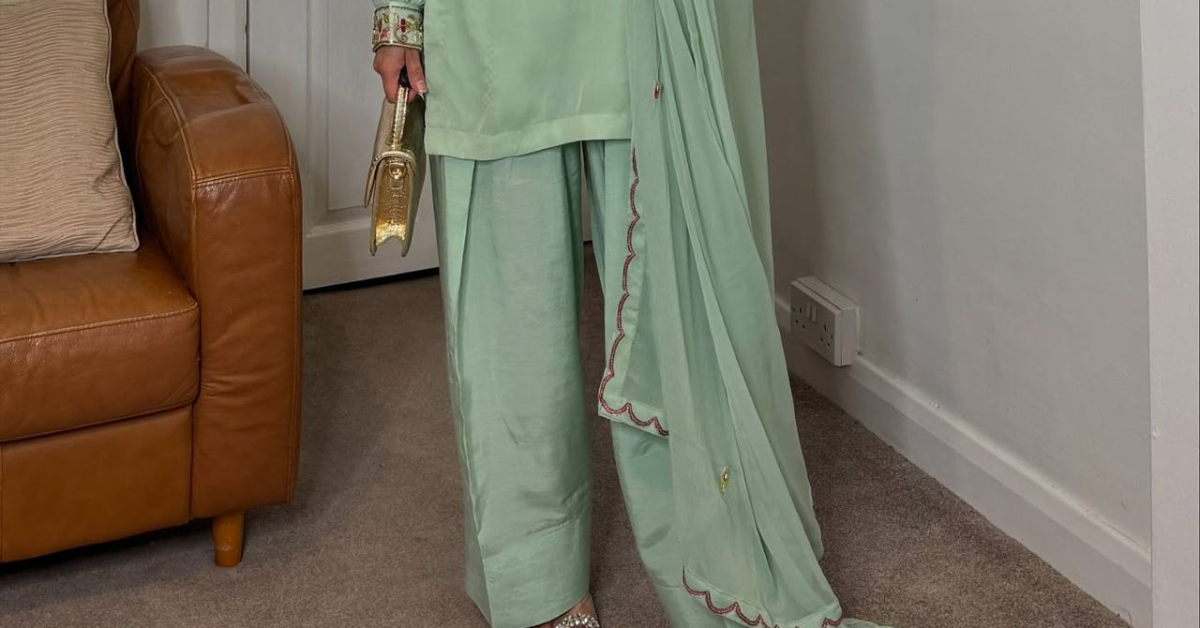
If you have been scrolling Instagram, Pinterest or TikTok lately, you have probably seen girls wearing short kurtas with wide, dramatic bottoms that almost touch the floor. That is a Farsi salwar. It looks royal, effortless and expensive even when the fabric is simple.
But what exactly is it, and why do girls love it so much today? Let us dive into the story behind this viral trend.
1) What is a Farsi Salwar?
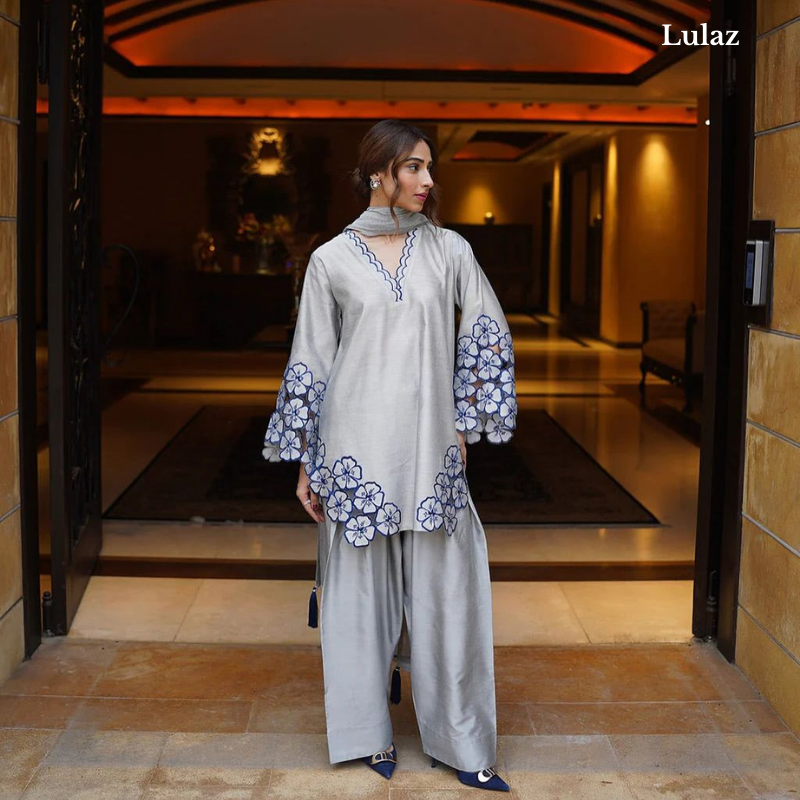
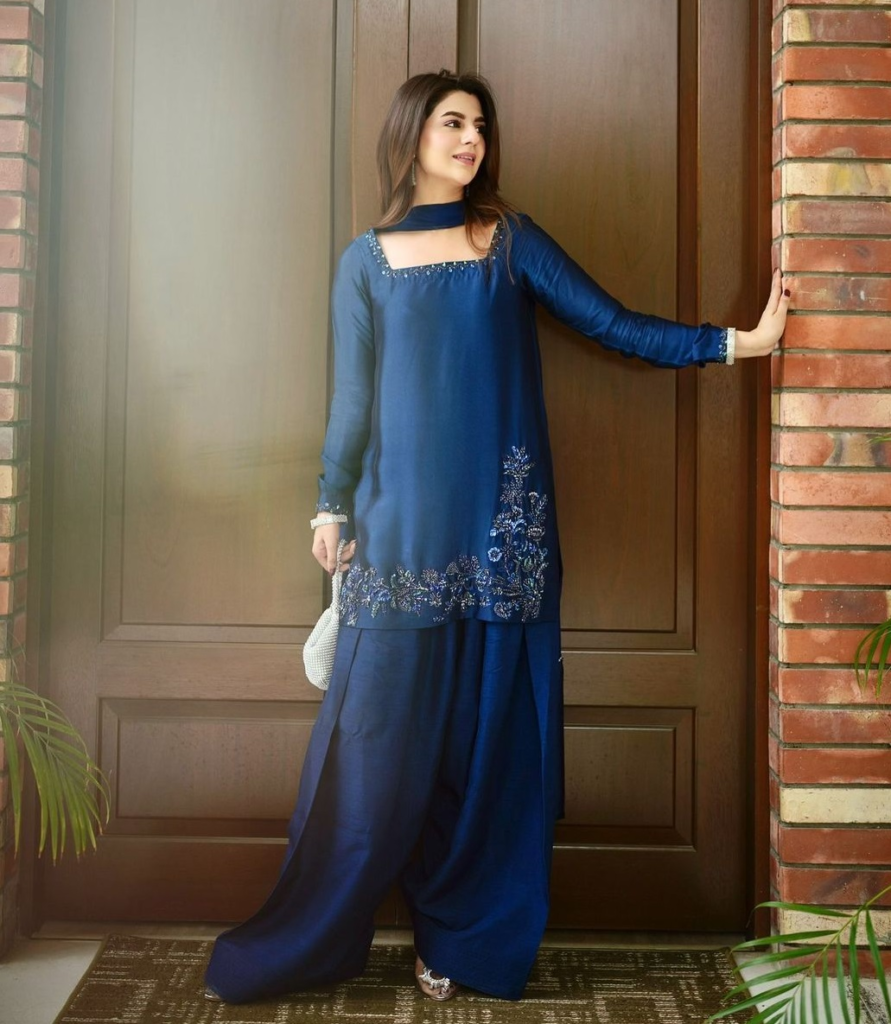
Farsi salwar is a wide, flowing style of salwar that is designed to look elegant and luxurious. Unlike traditional salwar that gathers tightly at the ankle, the Farsi salwar stays wide from the waist down. It creates a long, fluid silhouette that moves beautifully when you walk.
The shape sits somewhere between a classic salwar palazzo pants and sharara. But it has its own identity. It is not pleated like a sharara and not straight like a palazzo. It has volume but also softness.
It is usually paired with both short and long straight cut kurtas, A-line kurtas or formal short embroidered suits. It is most commonly seen in Pakistani fashion but has now spread across Nepal and global modest fashion communities.
2) Where Did Farsi Salwar Come From?
The word Farsi comes from Persian influence. Many Pakistani and Mughal era garments were inspired by Persian royal clothing. In royal courts, women wore wide trousers made from rich fabrics to create a majestic look. Many designers in Pakistan revived this silhouette in modern fashion, where bridal designers first experimented with wide, flowing bottoms to add drama under long kurtas. It slowly moved into festive wear and everyday luxury collections. Now, social media has helped it explode globally. Today, Farsi salwar is no longer limited to weddings. Girls wear it for parties, Eid, festivals, photoshoots and even casual fashion content.
3) Why Girlies Love Farsi Salwar?
i) It Looks Royal Without Effort
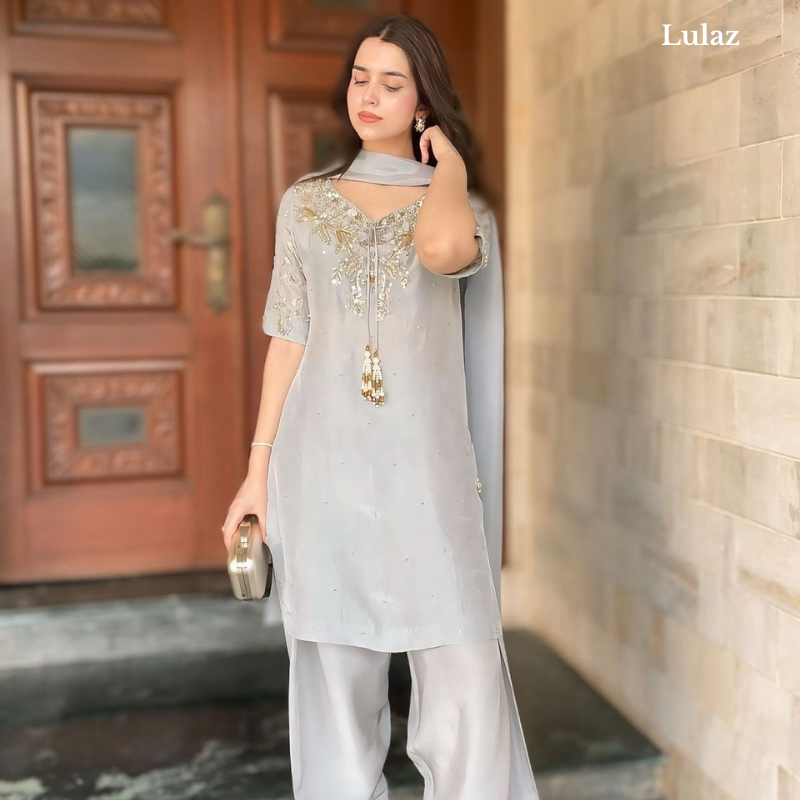
One of the biggest reasons girls love Farsi salwar is the instant royal look. You do not need heavy embroidery or expensive fabric. The shape itself creates luxury. The wide flow gives movement and drama and makes the outfit look like a designer piece, even if it is minimal.
II) It Flatters Almost Every Body Type
It does not cling to the body, but it flows around the legs and hips. This makes it flattering for curvy, slim, tall, and petite bodies. For girls who do not like tight bottoms. It feels comfortable and stylish at the same time.
III) It Moves Beautifully in Photos and Videos
Social media changed fashion. Outfits are now chosen based on how they look in motion. Farsi salwar flows when you walk, twirl or pose and creates cinematic movement in reels and photos. That is why influencers love it.
IV) It Feels Modest but Fashion Forward
Modest fashion is growing globally. Girls want outfits that cover the body but still feel trendy. it gives coverage without looking boring, and it feels modern, luxurious and elegant.
V) It Works With Both Simple and Heavy Kurtas
Another reason for its popularity is versatility, as the same silhouette works across occasions.
You can wear it with:
- Heavy bridal embroidered kurtas
- Festive silk or chiffon suits
- Minimal cotton shorts or long kurtas
- Luxury lawn suits
VI) It Gives Height and Elegance
It is long and flowy, and it creates a vertical line. This makes the wearer look taller and more graceful. When the fit is paired with heels, the effect is even stronger. Girls love anything that makes them feel taller and more elegant.
4) Farsi Salwar vs Regular Salwar
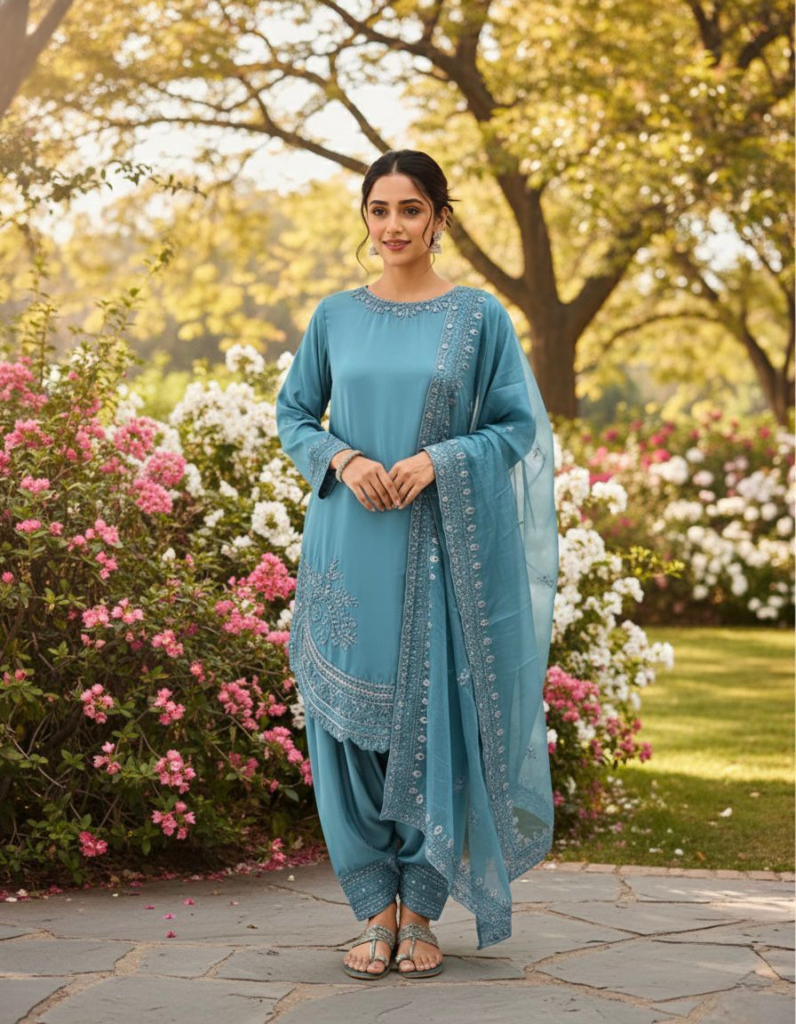
Traditional salwar gathers at the ankle and has a balloon shape. It is comfortable but not always flattering. Farsi salwar stays wide and falls straight down. It looks structured and premium. It does not create bulk at the ankle. Instead, it creates flow from waist to floor. That is why it feels more modern and luxurious.
5) Farsi Salwar vs Palazzo Pants
Palazzo pants are straight, wide-leg trousers that fall evenly from the waist to the hem. They are usually worn with short kurtas or modern tops and often give a casual, relaxed look. Farsi salwar, in contrast, is designed with much more volume and flow. While it may gather gently at the waist, it stays wide and fluid toward the bottom, creating a graceful, elegant silhouette that moves beautifully with every step. Unlike palazzos, which feel modern and minimal, it has a traditional, regal charm and pairs perfectly with both short and long kurtas, making any outfit look luxurious and couture-inspired.
6) How Pakistani Fashion Made Farsi Salwar Viral?
Pakistani designers have mastered the art of long kurtas and dramatic bottoms. It all started when many bridal designers started showcasing Farsi salwar in campaigns. Pakistani dramas and celebrity fashion amplified the trend, and the actresses wore long flowing suits with wide bottoms, and suddenly everyone wanted the same look. Social media influencers then adapted the trend for everyday wear. Girls in Nepal, India, the UK, the US, and Australia started styling themselves with modern accessories.
7) Why Farsi Salwar Feels Expensive?
Luxury fashion is often about silhouette, and it is not just fabric. it creates a silhouette associated with royalty and couture. The volume, the length and the flow give a couture vibe, and even simple fabrics like cotton or lawn can look premium when cut in this style. That is why brands use it to elevate their collections.
Experience the royal silhouette with Lulaz Wear. Explore our curated Farsi salwar kurtas designed to make you feel elegant, confident, and effortlessly luxurious.
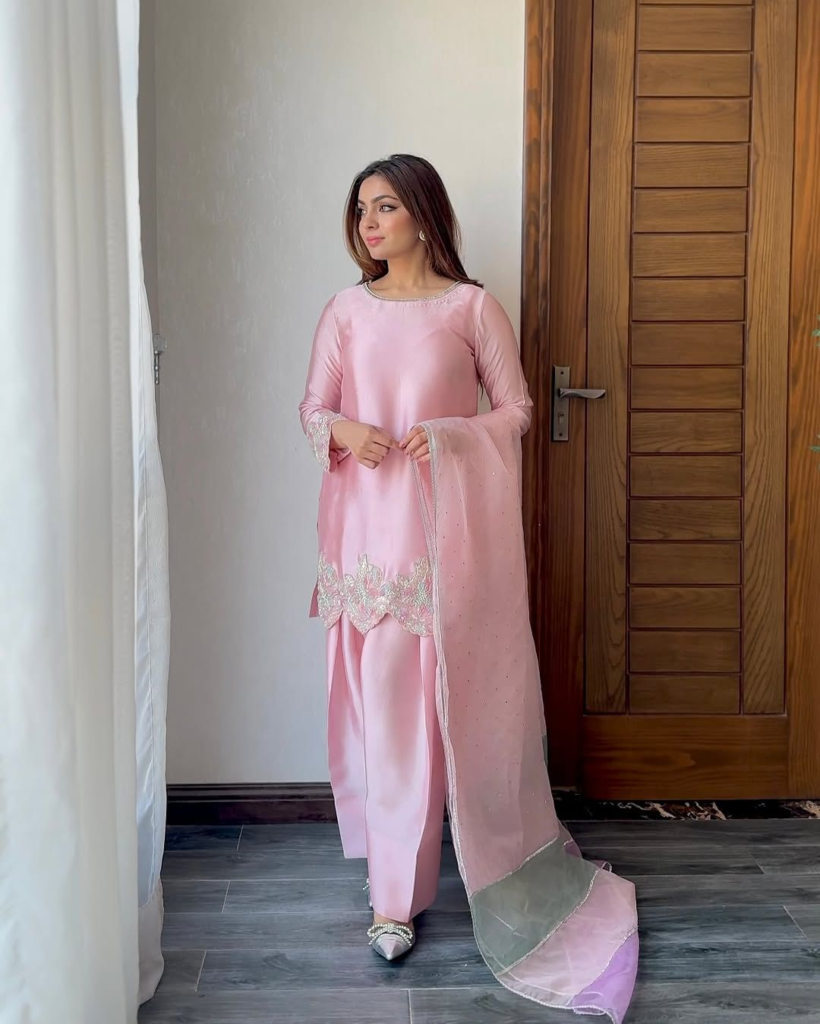
8) How to Style Farsi Salwar?
With Short Straight Cut Kurtas: This is the quintessential Pakistani-inspired look. Straight cut kurtas pair beautifully with Farsi salwar, allowing the dramatic flow of the bottoms to take centre stage while keeping the outfit chic and modern. This combination is perfect for casual parties, festive gatherings, or social media-ready fashion moments.
With A-Line Kurtas: A-line kurtas work wonderfully with Farsi salwar because they balance the volume of the wide bottoms. The flared top and flowing salwar together create a princess-like silhouette that feels elegant, graceful, and effortlessly stylish.
With Minimal Dupattas: To keep the focus on the luxurious silhouette of the Farsi salwar, a lightweight or minimal dupatta works best. This ensures the outfit remains modern and not too heavy, giving a clean, sophisticated look while still maintaining modesty.
With Statement Jewellery: Since the Farsi salwar silhouette is simple yet dramatic, bold jewellery can elevate the outfit even further. Oversized earrings, chunky bangles, or a statement ring add personality and glamour without overpowering the elegance of the ensemble.
With Heels: Pairing Farsi salwar with heels enhances the vertical line created by the long, flowy bottoms. Heels add height, poise, and a refined elegance to the look, making the wearer appear taller and more graceful, perfect for weddings, parties, or any event where you want to make a stylish impression.
9) Why This Trend Is Not Going Away?
Many fashion trends are seasonal. But it has the potential to become a staple like palazzo and sharara.
Reasons:
- It fits modest fashion trends
- It works for casual and formal wear
- Designers continue to reinvent it
- Social media loves flowy silhouettes
It is not just a viral trend. It is evolving into a classic.
10) Farsi Salwar in Nepal and Global Markets
Nepali girls are increasingly influenced by Pakistani fashion. From weddings and festivals to boutique everyday wear, long kurtas paired with wide, flowing bottoms are becoming the new style statement. This shift reflects a growing appreciation for elegant silhouettes that feel both traditional and high-fashion. In Western markets, modest fashion consumers are also discovering Pakistani silhouettes, and Farsi salwar fits perfectly into the global modest luxury movement, dramatic, graceful, and couture-inspired.
Frequently Asked Questions (FAQs)
What is a Farsi salwar?
Farsi salwar is a wide, flowy style of traditional South Asian bottomwear that stays loose from the waist to the hem.
Why is the Farsi salwar trending right now?
Farsi salwar is trending because of Pakistani fashion designers, celebrity styling, and social media reels.
How is a Farsi salwar different from palazzo pants?
Palazzos are straight and wide, while Farsi salwar is more voluminous with a traditional drape and a more regal look.
What kurtas look best with Farsi salwar?
Farsi salwar pairs well with short or long kurtas and embroidered kurtas for an elegant traditional look.
Can a Farsi salwar be worn casually or only for weddings?
Yes, a Farsi salwar can be worn casually as well as for weddings. You can just choose simple fabrics for daily wear and richer fabrics for special occasions.
Conclusion
Farsi salwar is more than just a bottomwear trend. It is a symbol of modern modest luxury. It combines heritage with contemporary fashion. It gives girls confidence, elegance and movement.That is why girls love it. It is comfortable but glamorous. Traditional but trendy. Simple but dramatic. And in a world where fashion is driven by reels, photos and personal expression, Farsi salwar checks every box.
Check out our YouTube channel for more content!!


